We recently worked with a small professional services company. Two businesses under one roof. Lean team doing a lot with a little.
What stood out wasn't dysfunction. It was how much invisible effort was going into keeping things running smoothly.
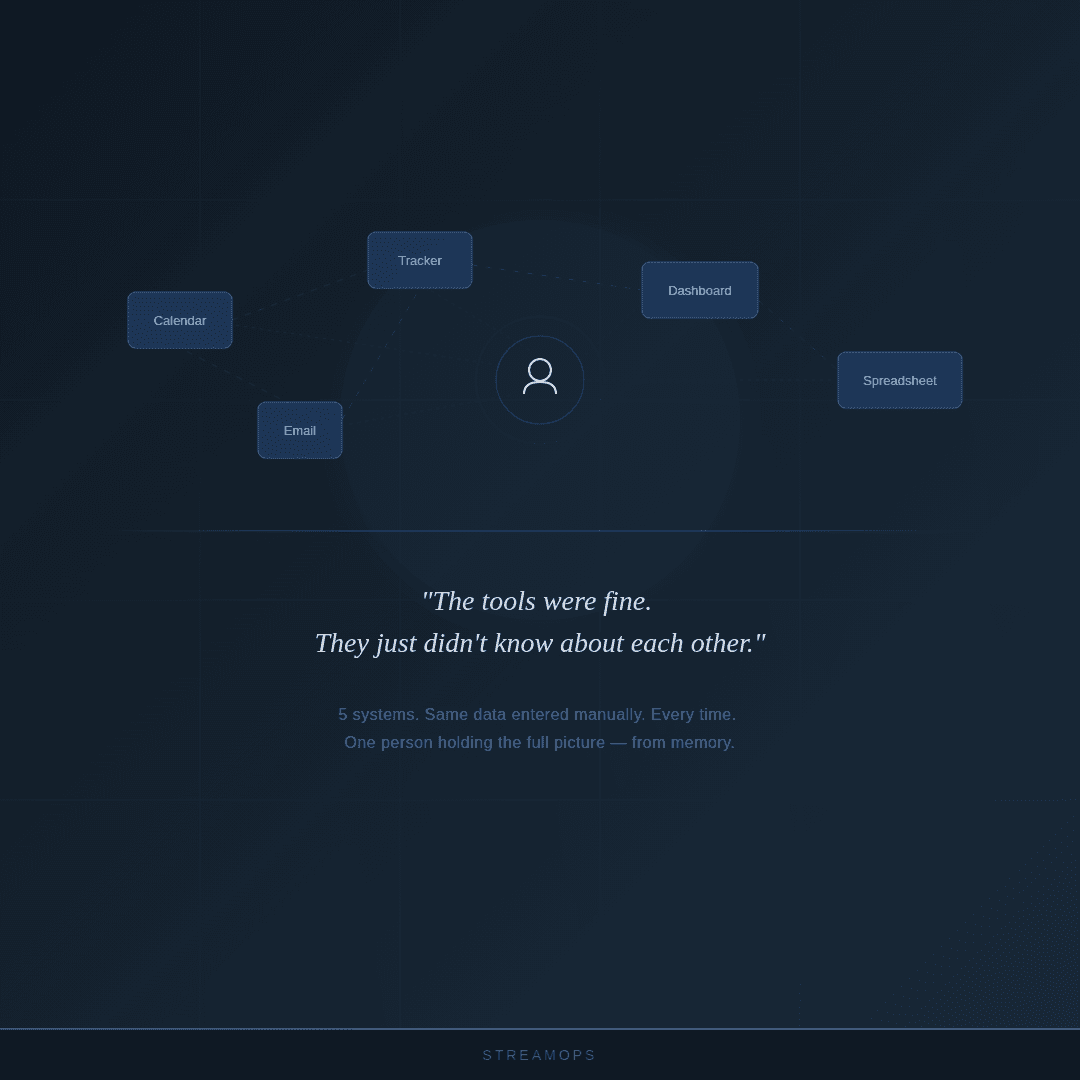
Every time a new session or event was booked, the same information needed to live in four or five places. Project tracker. Dashboard. Calendar. Spreadsheet. Sometimes a doc. The person managing it had the process down — but it was all manual, every time.
She mentioned spending a full week checking each platform daily just to make sure nothing was missed. Not because things were falling apart. Because she cared enough to make sure they didn't.
When something did slip, it got caught — usually by the founder, from memory. A week out, sometimes a month, depending on priority. It worked. But it only worked because one person was holding the full picture in her head at all times.
Tasks came in through four different channels. The team had figured out how to make that work too. But it meant staying vigilant across every platform just to keep up.
The founder estimated about 10 hours a week going to admin. Time she wanted to spend on business development but couldn't get to — not because of poor discipline, but because the coordination never paused.
The tools themselves were fine. Calendar, project tracker, dashboard — all doing their jobs. They just weren't connected to each other.
The opportunity wasn't replacing anything. It was wiring what already existed so that one entry could update the rest — and so the knowledge didn't have to live in any one person's head.
Sometimes the most capable teams are the ones absorbing the most invisible work.